DVIR for fleets of 5–50 vehicles · no ELD, no telematics, no per-vehicle fee
Pre-trip inspections that survive a dead zone.
PreShift is the offline-first DVIR your drivers actually finish: the inspection — every answer, every photo, the signature — is written to the phone's own storage before anything touches the network. A dead zone, a closed tunnel, a crashed tab or a flat battery cannot take the morning's inspection with it. When the phone sees a bar again, the queue drains itself and your office sees the record.
Why this exists
The category leader is a 20,000-rating app with a 4.6 average — and a recent review wall that says the same thing over and over: the inspection disappears. These are dated, public App Store reviews of Fleetio Go, the mobile client of the platform PreShift replaces for small fleets:
“Trying to do a pretrip this morning the app keeps restarting.”App Store review, 2026-01-14
“it constantly refreshes in the middle of an inspection.”App Store review, 2026-01-20
“Can never submit.”App Store review, 2026-03-09
“Freezes and doesn't save data entered.”App Store review, 2026-04-24
That is the whole product argument. PreShift is not a fleet platform; it is the one job — capture a pre-trip inspection without ever losing it — done so that losing it is not a possible outcome. A driver's answer lives on the device before a single byte is sent.
How the offline path works
1. Capture is a local write
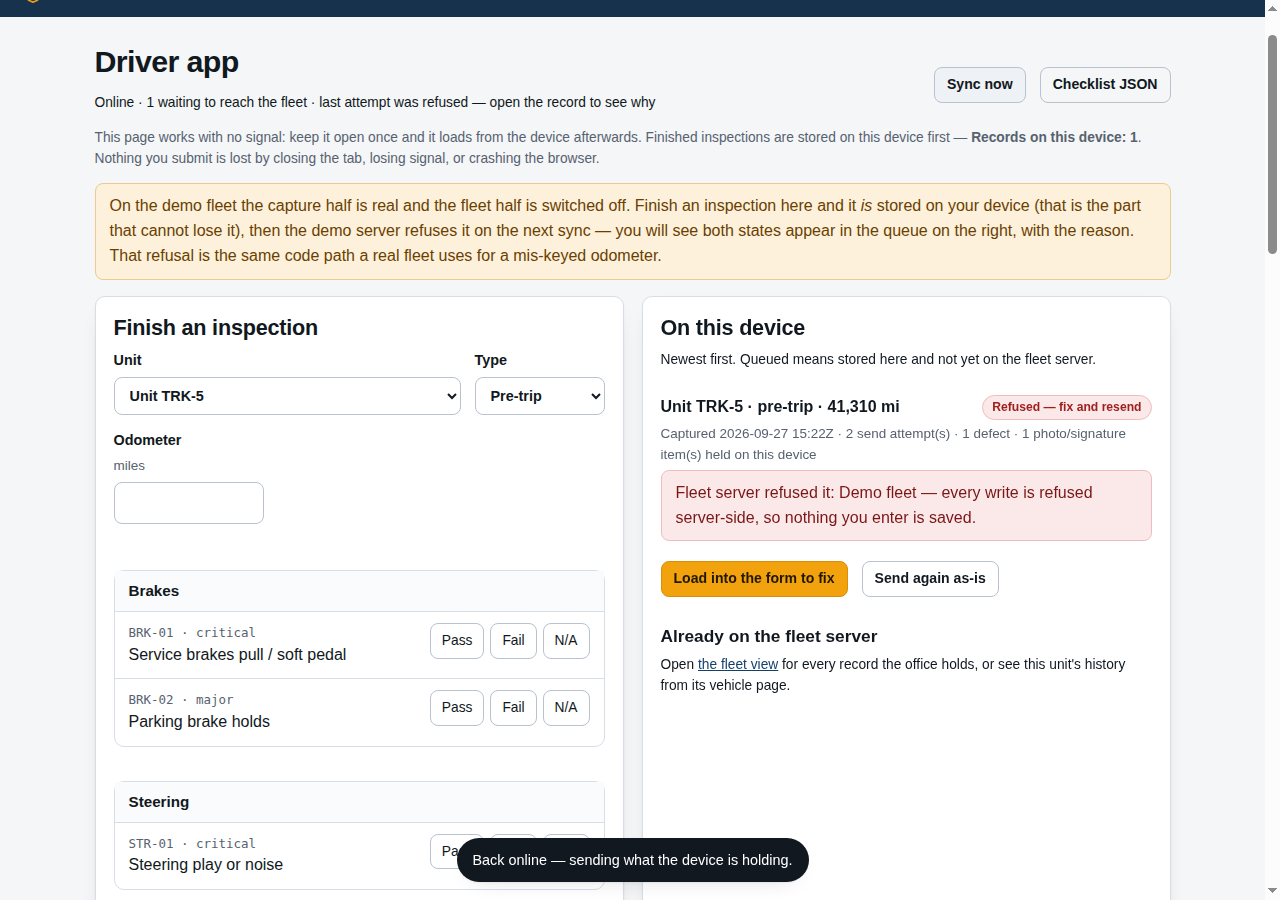
Pressing Finish inspection commits the answers, every photo and the signature into the phone's own database in one transaction. Only then does the app try the network.
2. The queue drains itself
Each record carries an id, so a retry after a lost answer returns the original record on the server instead of creating a duplicate. Photos upload by content hash — a resumed upload is the same upload.
3. A refusal is not a loss
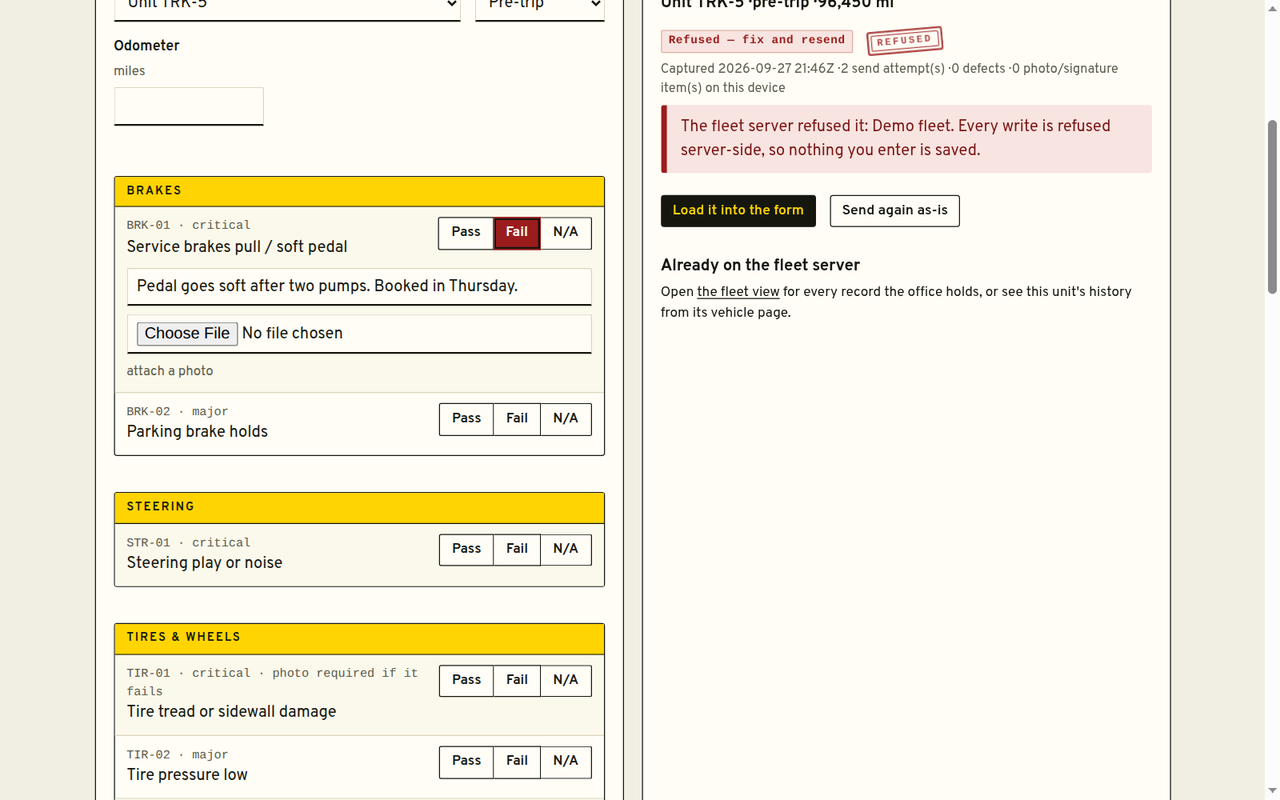
If the office server refuses a record (a mis-keyed odometer, say), the device keeps the record, the photos and the reason: the driver fixes the field and resends the same record.
What it looks like
Pricing
- Flat, per fleet — not per vehicle. A 30-vehicle fleet pays the same as a 5-vehicle one.
- Unlimited drivers and unlimited inspections
- Defect follow-up with close-out notes and photos
- Per-inspection PDF for the file, and a fleet defect summary
- CSV export of every inspection and defect — your data leaves with you
- Cancel any time, no contract
Card checkout is the live Stripe test-mode page for this product while it is pre-launch: no card is charged, and no account is created from it yet — a person emails you a login after you say hello.
What it deliberately is not
- No ELD, no telematics, no GPS ping — nothing to install in a van
- No "book a call" funnel; the demo is open and unauthenticated
- No per-vehicle pricing game at renewal
Who it is for
Service vans, box trucks, trailers and non-CDL fleets of 5–50 where the pre-trip inspection is a legal habit, not a telematics byproduct.
Questions drivers and owners ask
Does a driver need an account per vehicle?
No. One driver login, many vehicles. The unit is chosen at the top of the inspection.
What happens if the phone dies mid-inspection?
Answers are kept in the form as they are tapped; the record is stored on the device the moment it is finished. A dead battery loses only the taps that were already on screen.
Can the office see a defect before the driver gets back?
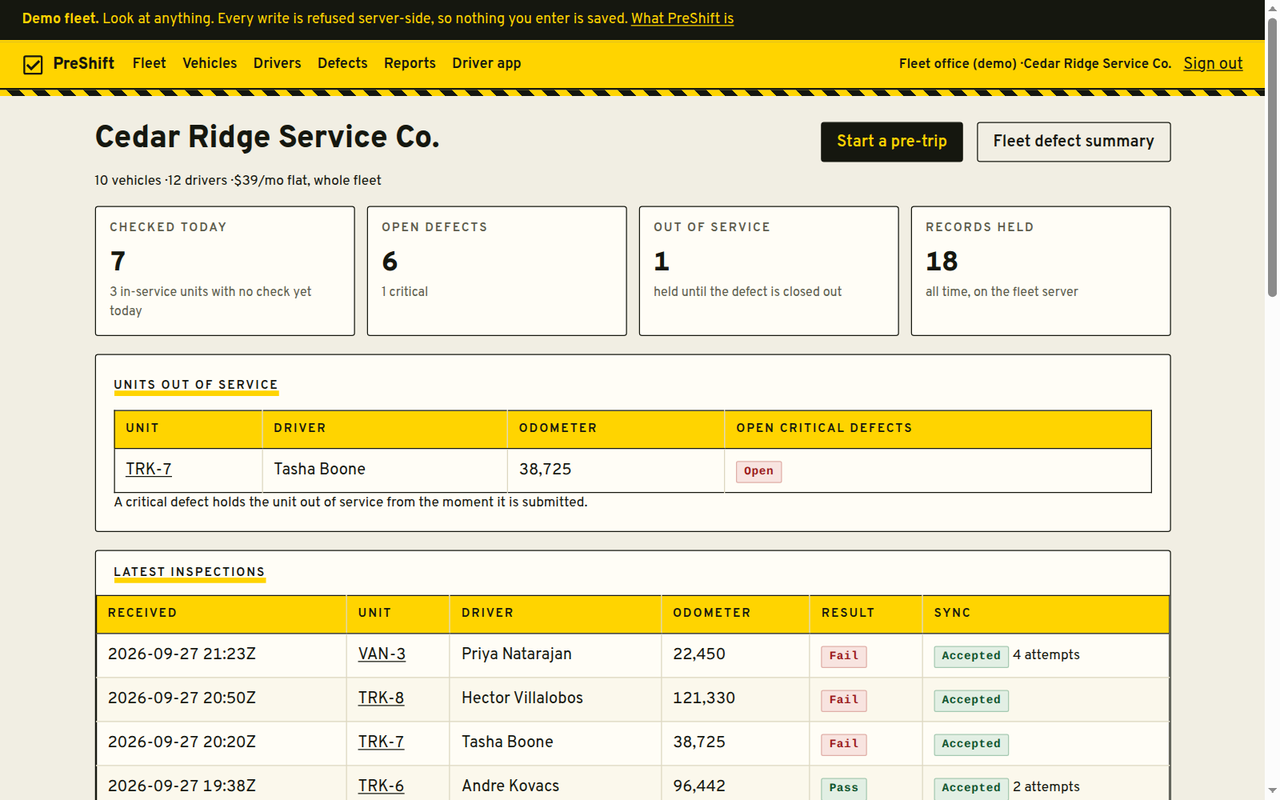
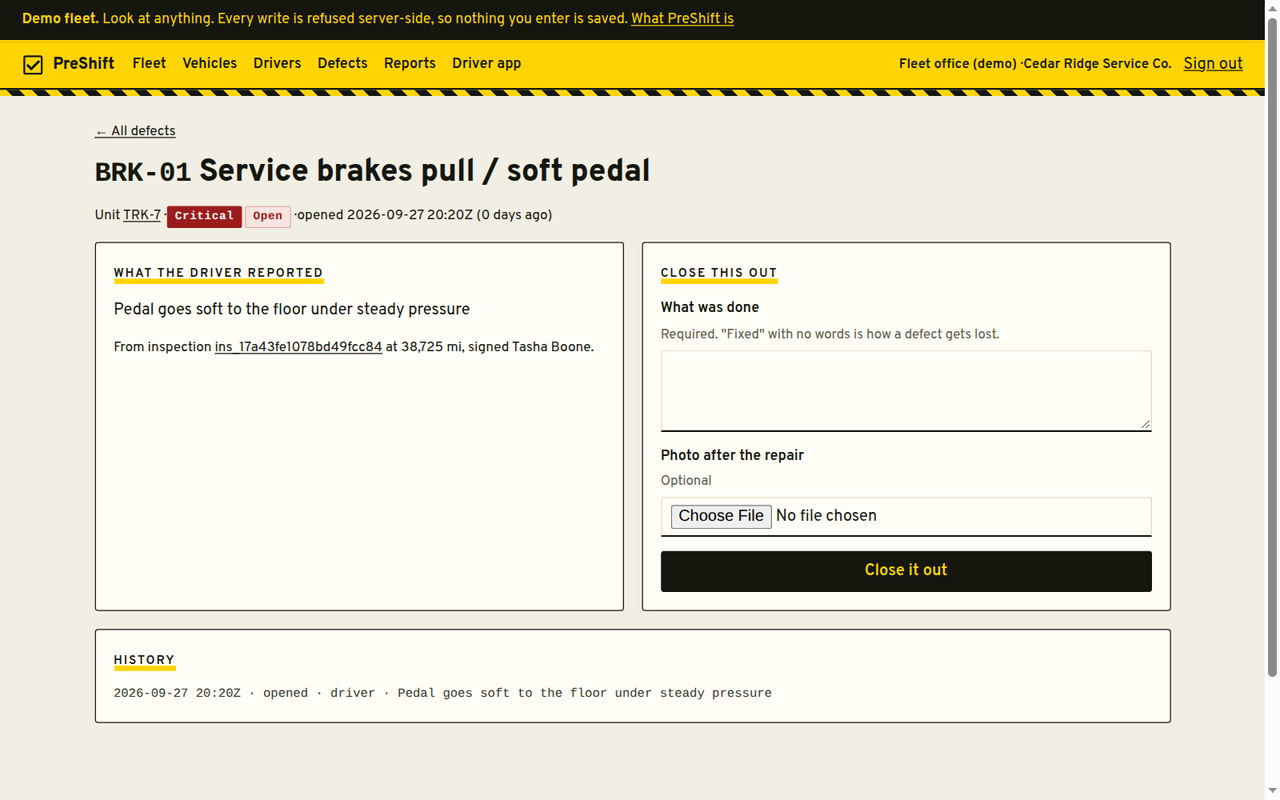
Yes — as soon as the device has any signal the record lands, and a critical defect takes the unit out of service in the app until it is closed out.
Do we have to use your checklist?
You start from a built-in DVIR list of 23 codes with severities; every fleet can edit codes, categories and photo requirements.